


- September 15, 2026
Solar Panels Australia: When Is Their Peak Production Time?
Discover when solar panels reach peak production, what affects solar output and how Australian homes can make better use of daytime solar energy.
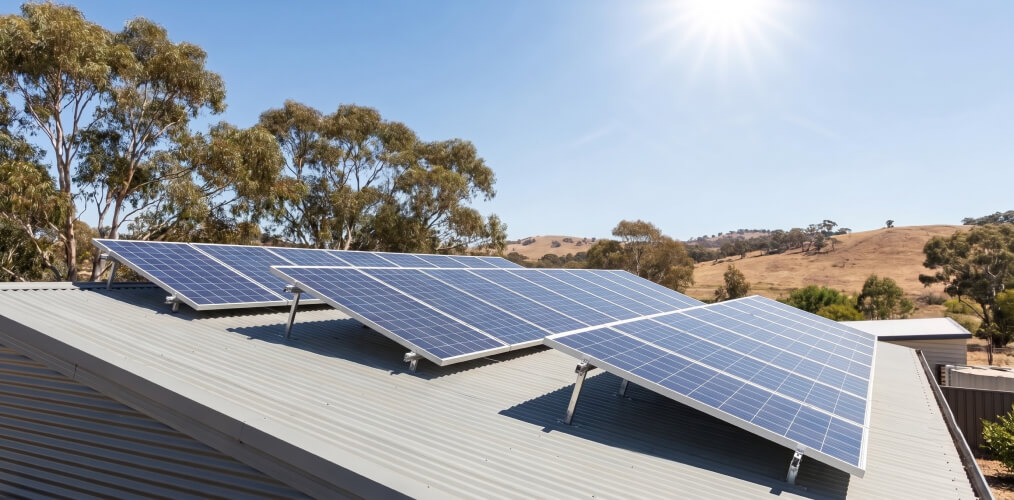
Your Solar Panels Have a Peak Time - Do You Know When It Is?
Ever wondered when your solar panels are actually producing the most electricity?
Solar generation changes throughout the day. It starts slowly in the morning, builds as sunlight becomes stronger, reaches its highest levels around the middle of the day, and then gradually drops in the afternoon.
Understanding this daily pattern can help Australian households make smarter use of their solar panel system
When Do Solar Panels Produce the Most Energy?
Solar panels generally produce their highest output around the middle of the day, when sunlight is strongest and most direct.
However, there isn't one fixed peak time for every home.
The actual generation pattern depends on several factors, including:
- The direction and angle of your roof
- The season and available daylight
- Cloud cover and weather conditions
- Shading from trees or nearby buildings
- The size and design of your solar system
This means your home's peak solar production may look different from another home, even if both have similar systems.
From Sunrise to Sunset
Your home solar system follows the movement and intensity of sunlight throughout the day.
Morning: Solar production begins as sunlight reaches the panels and gradually increases.
Late morning: Generation becomes stronger as more direct sunlight reaches the panels.
Around midday: Solar production commonly reaches its strongest point.
Afternoon: Generation gradually decreases as the sun moves lower.
Evening: Solar production drops as daylight fades, eventually reaching zero after sunset.
So, while your panels are working throughout daylight hours, they aren't necessarily producing the same amount of electricity at every moment.
What Can Affect Your Solar Peak?
Roof Direction
The direction your panels face influences when they receive the strongest sunlight. A well-designed system considers your property's orientation rather than simply focusing on the number of panels.
Shade
Even partial shading can affect solar generation. Trees, neighboring buildings, chimneys, and other structures can change how much sunlight reaches your panels during different parts of the day.
Weather
Clear skies generally provide stronger conditions for solar generation, while cloud cover can reduce output. Your system can still generate electricity on cloudy days, but production may be lower.
Season
Solar generations naturally change throughout the year. Longer daylight hours and the sun's position can influence how much energy your solar panels in Australia produce.
When Should You Use Your Solar Energy?
Here's where knowing your solar peak becomes useful.
If your household uses electricity during periods when your panels are generating strongly, more of that solar electricity can potentially be used directly in your home.
For example, suitable daytime activities such as:
- Running the washing machine
- Using the dishwasher
- Heating or cooling the home
- Running pool equipment
- Charging compatible devices
can be timed around your solar generation where practical.
The goal isn't to completely change your lifestyle. It's about understanding when your solar energy system is generating and making use of that energy when it suits your household.
Your Solar Monitoring Can Tell the Story
One of the easiest ways to understand your system is by looking at your solar monitoring data.
Instead of guessing when your panels are performing best, you can see how generation changes throughout the day.
Over time, this can help you understand your home's own generation pattern and identify when your system typically produces the most electricity.
Peak Production Isn't the Same as Daily Production
It's also important to understand that your peak output isn't the same as your total energy generated throughout the day.
Your panels might reach their highest output for a relatively short period, while producing smaller amounts of electricity for several hours before and after that peak.
Think of it this way:
Peak output = your system's strongest moment
Daily generation = the total solar energy produced throughout the day
Both are useful when understanding how your solar panel system performs.
Every Home Has Its Own Solar Pattern
There is no universal generation curve that perfectly represents every Australian home.
A home in Brisbane may experience a different solar pattern from one in Melbourne. Even homes next door to each other can have different results because of roof orientation, shading, panel placement, and system design.
That's why choosing and designing a solar power system for your home should be based on the property and household, not simply the number of panels installed.
Final Thoughts
Your solar panels aren't produced at full strength all day, and that's completely normal.
Solar generation naturally builds, reaches a peak, and then falls as the sun moves across the sky. Understanding this pattern gives you a clearer picture of how your system works and how your household can make better use of the electricity it produces.
The real value isn't just knowing when your solar panels peak. It's understanding how those peaks fit into your home's energy use.
If you're considering solar panels for your home, Adopt Solar can help you choose and understand a solar system designed around your property and energy needs.

